What are molecules, what do they consist of, and why do the atoms in molecules have different colors?
What are Molecules?
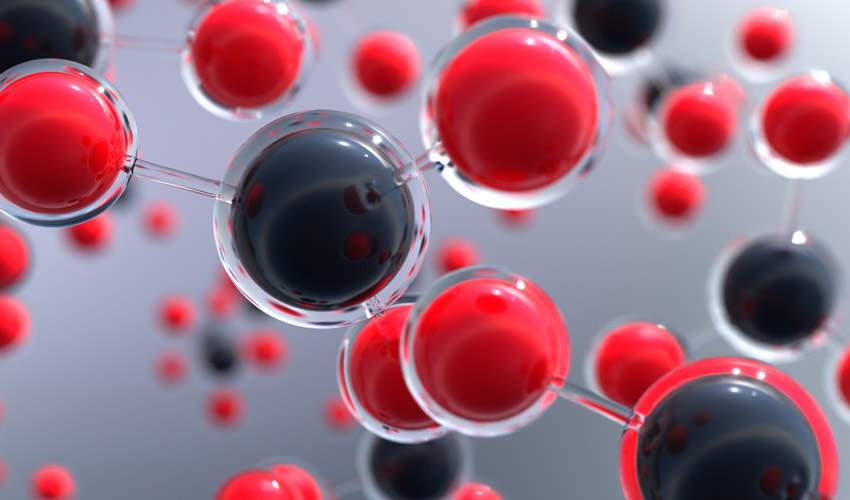
A molecule is the smallest unit of a chemical compound that retains the chemical properties of that compound. It consists of two or more atoms held together by chemical bonds (typically covalent bonds, where atoms share electrons).
Molecule Examples
Water H2O
Oxygen O2
Carbon dioxide CO2
Ethanol C₂H₅OH or CH₃CH₂OH
Glucose C₆H₁₂O₆
Caffeine C₈H₁₀N₄O₂
Aspirin C₉H₈O₄
What colors are molecules?
Molecules exhibit a wide range of colors, from completely colorless to vibrant hues like green, red, orange, or purple. The perceived color (or lack thereof) arises from how a substance interacts with visible light, which are wavelengths roughly between 400–700 nm.
A molecule appears colored when it absorbs certain wavelengths of visible light and reflects or transmits the rest. The absorbed light excites electrons from lower to higher energy levels (molecular orbitals). The specific wavelengths absorbed depend on the molecule’s structure.
Colorful Molecules
Colorful molecules are a wonderful window into how chemistry and light interact. Let’s take a tour through some of the most striking examples across nature, biology, and industry.
Chlorophyll (Green)
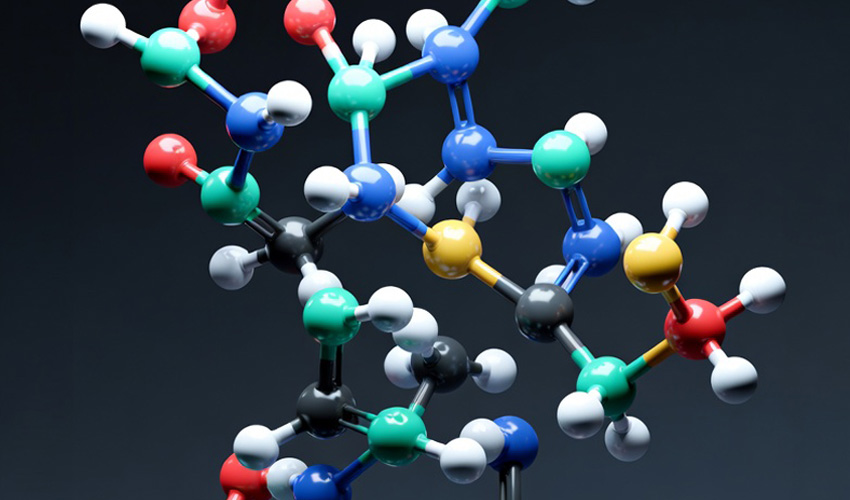
Chlorophyll is the pigment that makes plants green. It’s green because it absorbs red and blue light strongly, leaving green to be reflected.
It has a large porphyrin ring with a magnesium ion at the centre. Different forms of (chlorophyll a, b, etc.) changes the shade of green.
Hemoglobin & Heme (Red)
The red color of blood comes from the heme group inside hemoglobin. It’s red because the iron-containing porphyrin absorbs blue and green wavelengths.
Oxygen binding slightly changes the color, arterial blood is brighter than venous blood.
Carotenoids (Orange/Yellow)
Found in carrots, autumn leaves, and flamingos. They’re orange due to the long chains of conjugated double bonds that absorb blue light.
Carotene (orange), lutein (yellow), astaxanthin (red-orange).
Azulene (Blue)
A rare blue organic molecule. It’s blue because its unusual electron distribution creates a low-energy electronic transition.
It’s isomeric with naphthalene (which is colorless), showing how structure controls color.
Potassium Permanganate (Purple)
A classic deep-purple inorganic compound. It’s purple due to the charge-transfer transitions involving manganese(VII).
Used for disinfection, redox chemistry, and dramatic color-change demos.
Curcumin (Yellow)
The bright yellow of turmeric. It’s yellow because of a long conjugated system that absorbs violet/blue light.
Its color changes with pH, making it a natural indicator.
Copper(II) Sulfate (Blue)
The vivid blue crystals used in chemistry sets. It’s blue because the d–d electron transitions in the Cu²⁺ ion.
The anhydrous form is white; adding water restores the blue.
Melanin (Brown/Black)
The pigment in skin, hair, and eyes. it’s black or brown because it absorbs broadly across the visible spectrum.
A complex polymer rather than a single molecule.
Patterns Behind These Colors
Across all these examples, color usually comes from one of two mechanisms. These are conjugated π‑systems (organic dyes, pigments). Long chains or rings with alternating double bonds create energy gaps that match visible light. Metal-centred transitions (inorganic complexes). Transition metals have d‑orbitals that absorb visible wavelengths.
Why some molecules are colorless?
Small molecules like water, oxygen, nitrogen, and carbon dioxide don’t absorb visible light. Their electrons require UV (Ultraviolet) or IR (Infrared) light to jump energy levels, so to our eyes they look transparent or colourless. What’s infrared and ultraviolet light?